VPSA Oxygen Generator

Products / Oxygen Generator / VPSA Oxygen Generator

VPSA Oxygen Generator
Oxygen Generator

VPSA Oxygen Generator

HBV Series

Willgas VPSA (Vacuum Pressure Swing Adsorption) oxygen generators produce 90%-95% purity oxygen at high flow rates (100-5,000 Nm³/h). Using nitrogen-selective zeolite molecular sieve with vacuum-assisted regeneration, the system achieves 0.28-0.35 kWh/Nm³ energy consumption. Ideal for wastewater treatment, metal fabrication, glass manufacturing, aquaculture, pulp and paper, and chemical processing with reliable 15-20 year service life.

Inquiry Now +86-13817675951

VPSA Oxygen Generator Overview

The VPSA (Vacuum Pressure Swing Adsorption) oxygen generator is an advanced on-site oxygen supply solution designed for medium-to-large scale industrial applications requiring high flow rates. The system utilizes nitrogen-selective zeolite molecular sieve to separate oxygen from compressed air under lower pressure (0.3-0.6 bar) with vacuum assist, delivering oxygen purity of 90%-95% at flow rates from 100 to 5,000 Nm³/h.

Key Components

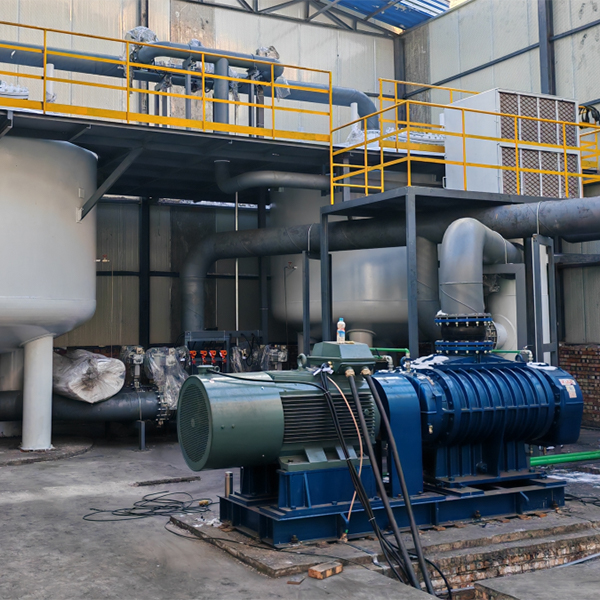
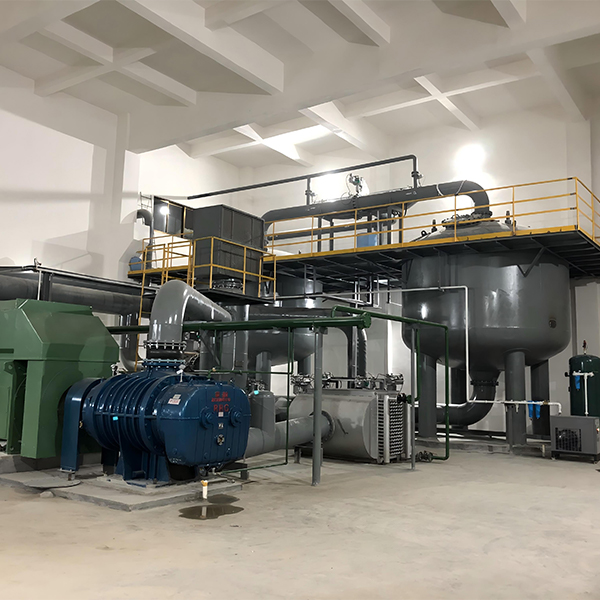
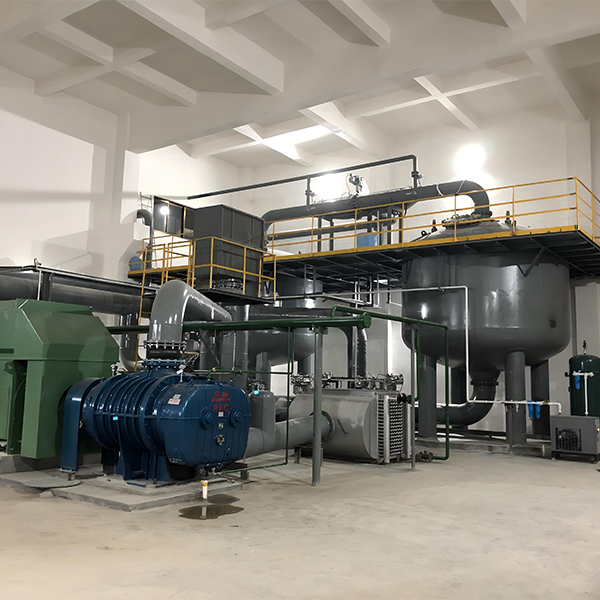
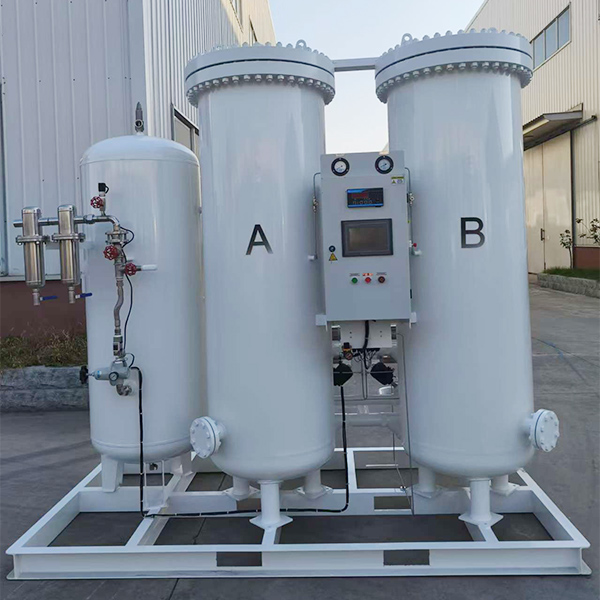
  • Blower: Provides the air supply at low pressure
  • Vacuum Pump: Regenerates the molecular sieve through vacuum desorption
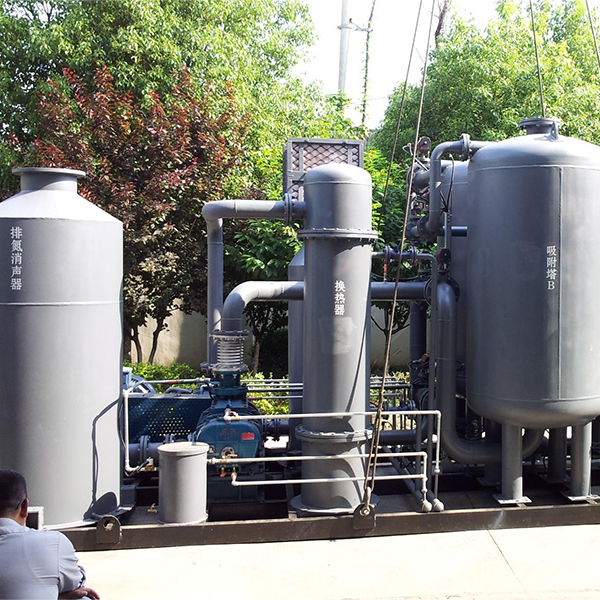
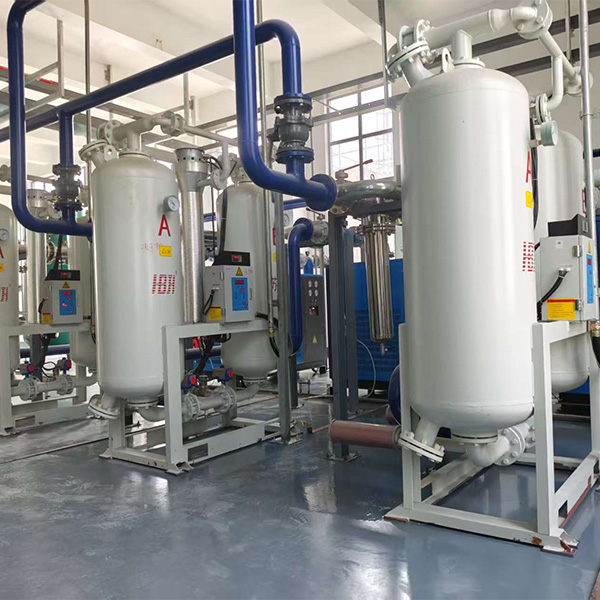
  • Adsorption Tower: Dual-bed vertical design with active aluminum oxide protection layer
  • Oxygen Buffer Tank: Ensures stable output pressure and flow
  • Control System: PLC-based automatic switching between towers
  • Cooler: Maintains optimal operating temperature

Core Technology

The system uses imported professional nitrogen-selective zeolite molecular sieve known for stable and reliable performance. The absorber features a special airflow distribution structure that ensures uniform gas distribution and maximizes molecular sieve bed utilization. The vertical double-bed adsorber design incorporates lower-layer active aluminum oxide to reduce the impact of water vapor on molecular sieve performance. During regeneration, nitrogen desorption combined with clean air purging extends the molecular sieve service life.

VPSA oxygen generator

System Advantages

  • Low energy consumption: 0.28-0.35 kWh/Nm³ of oxygen produced
  • Fast start-up: reaches full purity within minutes
  • Automatic operation: unattended PLC control with remote monitoring capability
  • Compact footprint: modular skid-mounted design saves installation space
  • Long lifespan: 15-20 years system life, 8-10 years molecular sieve life
Parameter Specification
Model SeriesHBV Series
Oxygen Purity90% – 95%
Oxygen Flow Range100 – 5,000 Nm³/h
Operating Pressure (Adsorption)0.3 – 0.6 bar
Power Consumption0.28 – 0.35 kWh/Nm³
Dew Point≤ -40℃ (optional -60℃)
Ambient Temperature Range5℃ – 45℃
AdsorbentNitrogen-selective zeolite molecular sieve (imported)
Protection LayerActive aluminum oxide (PSA grade)
Adsorber ConfigurationVertical dual-bed
Regeneration MethodVacuum-assisted + nitrogen desorption
Control SystemPLC automatic with HMI touchscreen
Cooling MethodAir-cooled or water-cooled (optional)
System Service Life15 – 20 years
Molecular Sieve Life8 – 10 years
InstallationSkid-mounted, outdoor/indoor

Working Principle of VPSA Oxygen Generator

Basic Principle: Vacuum Pressure Swing Adsorption

The VPSA oxygen generator operates on the Vacuum Pressure Swing Adsorption (VPSA) principle, a refinement of standard PSA technology that uses vacuum assistance for the regeneration phase, significantly reducing energy consumption for large-scale applications.

Step-by-Step Process

  1. Air Intake and Pre-treatment: Ambient air is drawn in through an air filter by a low-pressure blower. The air passes through an intake silencer and pre-filter to remove dust and particulates.
  2. Adsorption Phase: The pre-treated air enters the adsorber vessel containing nitrogen-selective zeolite molecular sieve. Under pressure (0.3-0.6 bar), nitrogen molecules are selectively adsorbed into the micropores of the molecular sieve, while oxygen molecules pass through the bed and are collected as product gas.
  3. Oxygen Collection: The oxygen-rich product gas flows to the oxygen buffer tank. An oxygen analyzer continuously monitors purity, and a flow control valve regulates output to meet demand.
  4. Vacuum Regeneration: When the adsorbent in one tower nears saturation, the system switches airflow to the parallel tower. A vacuum pump draws a strong vacuum (typically -0.5 to -0.7 bar) on the saturated tower, desorbing the trapped nitrogen and regenerating the molecular sieve for the next cycle.
  5. Purge and Equalization: A small portion of product oxygen may be used to purge the regenerated tower. Pressure equalization between towers before switching further improves efficiency.
  6. Cycle Repetition: The two towers alternate between adsorption and regeneration phases automatically, typically on a 60-120 second cycle, ensuring continuous oxygen supply.

Key Technical Features

  • Lower Operating Pressure: Unlike PSA systems (4-8 bar), VPSA operates at only 0.3-0.6 bar, dramatically reducing blower energy requirements.
  • Vacuum Assisted Desorption: The vacuum pump creates negative pressure to effectively strip adsorbed nitrogen, achieving thorough regeneration without high-temperature heating or high-pressure gas purge.
  • Special Airflow Distribution: The absorber's unique internal structure ensures uniform airflow across the molecular sieve bed, maximizing utilization efficiency and preventing channeling.
  • Active Aluminum Oxide Protection: The lower layer of the adsorber contains active aluminum oxide that protects the molecular sieve from moisture degradation, extending adsorbent life to 8-10 years.

Product Advantages

Advantage Description
Special Airflow Distribution The absorber adopts a unique airflow distribution structure ensuring uniform gas flow across the molecular sieve bed, maximizing bed utilization and improving separation efficiency.
Vertical Dual-Bed Design The adsorber's vertical double-bed configuration incorporates lower-layer active aluminum oxide that reduces water's impact on molecular sieve adsorption performance. During regeneration, nitrogen desorption combined with clean air purging for the aluminum oxide (no heat regeneration) extends sieve life.
Imported Molecular Sieve We use professional-grade imported molecular sieve for oxygen generation. Its performance is stable and reliable, ensuring consistent oxygen purity over years of operation.
PSA-Grade Active Aluminum Oxide Using specially formulated active aluminum oxide for PSA systems effectively protects the molecular sieve from contaminants and moisture, reducing degradation and replacement frequency.
Excellent Energy Efficiency Typical power consumption of 0.28-0.35 kWh/Nm³ — significantly lower than conventional PSA oxygen generation systems, reducing operational costs.
Large Capacity Capability VPSA technology is especially efficient for applications requiring large amounts of oxygen (100-5,000 Nm³/h), offering the most economical solution at scale.
High Reliability and Uptime Fewer moving parts than conventional compressor systems, intelligent automatic switching between vessels, and robust PLC control ensure exceptional system uptime.
Customizable and Modular Systems are engineered to meet specific capacity requirements with modular design options for future expansion.
Fast Payback Period Switching from liquid or cylinder oxygen to on-site VPSA generation typically pays for itself in 1-3 years, delivering strong ROI.

Typical Applications

VPSA systems are excellent for high flow rate oxygen supply (typically 100-5,000 Nm³/h) at medium purity (90-95%). They are the preferred choice in the following industries:

Industry Application Description
Wastewater Treatment Oxygen injection accelerates bacterial decomposition of organic matter, significantly enhancing treatment efficacy and reducing aeration energy costs compared to air-based systems.
Metal Fabrication Oxygen-enriched combustion improves efficiency in metal cutting, welding, and smelting operations, boosting productivity and reducing fuel consumption.
Glass Manufacturing Oxygen-enriched furnaces achieve higher combustion temperatures, yielding better quality glass with lower NOx emissions and reduced energy usage.
Pulp and Paper Oxygen delignification in the bleaching process decreases chemical consumption (especially chlorine-based agents) and reduces the environmental burden of effluent discharge.
Aquaculture Precise oxygen dosing in fish farms promotes healthier stock, improves feed conversion rates, and enables higher stocking densities for greater production yields.
Chemical Manufacture Reliable on-site oxygen supply for oxidation processes in chemical production ensures consistent product quality and eliminates dependency on delivered liquid oxygen.
Pulp Bleaching Oxygen-based bleaching sequences reduce or eliminate chlorine usage, producing brighter pulp with lower environmental impact.
Steel and Metallurgy Oxygen enrichment in blast furnaces and basic oxygen furnaces improves combustion efficiency and accelerates steel production cycles.

Related Products

Need More Information?

Contact us for detailed product specifications and customized solutions.

Contact Us