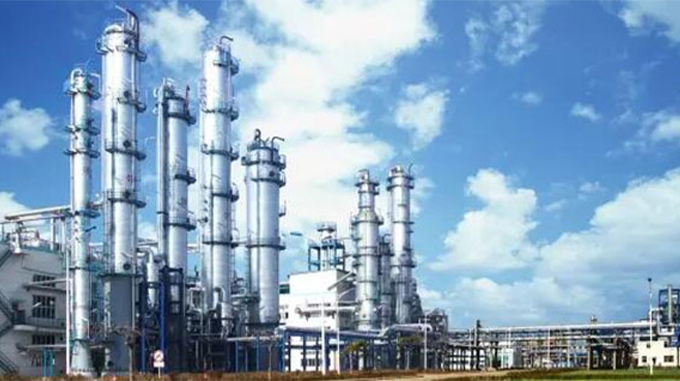
Nitrogen in Chemical Industry — Safety, Quality, and Efficiency
Nitrogen is the most widely used inert gas in the chemical industry, essential for safe operation of storage, processing, and handling of flammable, reactive, and oxidation-sensitive chemicals. The chemical industry accounts for approximately 25% of global industrial nitrogen consumption.
The Critical Role of Nitrogen in Chemical Plant Safety
Chemical plants handle thousands of hazardous materials — flammable solvents, reactive monomers, pyrophoric catalysts, and toxic intermediates. Nitrogen provides the inert environment that prevents fires, explosions, and unwanted chemical reactions. The global chemical industry invests billions annually in nitrogen systems as a fundamental safety measure.
1. Tank Blanketing and Vapor Space Protection
Nitrogen blanketing of storage tanks is the largest single application of nitrogen in chemical plants:
- Fixed roof tanks: Continuous nitrogen blanketing maintains a positive pressure in the vapor space above the liquid, preventing air ingress and explosive mixture formation. A typical 1000 m³ solvent storage tank requires 5-20 Nm³/h of nitrogen blanketing.
- Floating roof tanks: Nitrogen seal systems around the floating roof perimeter prevent vapor release and air ingress.
- Pressure vessels: Nitrogen blanket on pressure vessels storing reactive chemicals maintains stable conditions and prevents contamination.
- Day tanks and process vessels: Nitrogen blanketing on small-volume process vessels supplying production areas.
Blanketing control: Modern tank blanketing uses pilot-operated pressure regulators that maintain tank pressure at 0.5-2 inches water column, with separate nitrogen supply for normal breathing and emergency make-up.
2. Pipeline and Vessel Purging
Purging is essential before maintenance, product changeover, or process startup:
- Displacement purging: Nitrogen flow pushes the existing gas or vapor out of the pipeline or vessel. Simple and effective for straight pipe sections.
- Dilution purging: Nitrogen mixes with and dilutes the existing atmosphere, gradually reducing the concentration of hazardous materials. Used for complex geometries and vessels with internal structures.
- Pressure cycle purging: Alternating pressurization with nitrogen and venting cycles. Most nitrogen-efficient method, reducing consumption by 50-70% compared to displacement purging.
- Vacuum purging: Evacuating the vessel followed by nitrogen backfill. Used for high-purity requirements and where nitrogen consumption must be minimized.
3. Reactor Inerting and Atmosphere Control
Chemical reactions requiring inert atmosphere protection include:
- Polymerization: Nitrogen atmosphere in batch and continuous polymerization reactors for polyethylene, polypropylene, polystyrene, and PVC prevents oxygen inhibition and ensures consistent molecular weight distribution.
- Hydrogenation: Nitrogen purge before and after hydrogenation reactions to prevent explosive hydrogen-air mixtures.
- Oxidation reactions: Controlled oxygen-nitrogen mixtures for selective oxidation of hydrocarbons (e.g., ethylene oxide, propylene oxide production).
- Grignard reactions: Strictly anhydrous and oxygen-free nitrogen atmosphere for Grignard reagent preparation and reactions.
- Organometallic synthesis: Ultra-high-purity nitrogen for air-sensitive organometallic compound synthesis.
4. Solvent Recovery and Distillation
- Solvent distillation: Nitrogen stripping in distillation columns removes volatile solvents from process streams while preventing solvent degradation.
- Solvent recovery: Nitrogen-blanketed solvent recovery systems for capturing and reusing process solvents, reducing VOC emissions by 95%+.
- Thin film evaporators: Nitrogen sweep gas in thin film and wiped film evaporators for heat-sensitive chemical products.
5. Catalyst Handling
Many industrial catalysts are pyrophoric — they ignite spontaneously when exposed to air:
- Catalyst loading: Nitrogen-purged loading operations for fresh catalyst into reactors, preventing air exposure.
- Catalyst reduction: Nitrogen-diluted hydrogen for catalyst reduction (activation) before process startup.
- Catalyst regeneration: Nitrogen-controlled atmosphere for decoking and regeneration of spent catalysts.
- Catalyst unloading: Nitrogen protection during unloading of spent catalyst from reactors, preventing pyrophoric reactions.
6. Flare and Vent Systems
- Flare purge: Continuous nitrogen purge in flare stacks prevents air ingress and maintains safe operation. A typical flare purge uses 5-50 Nm³/h of nitrogen depending on stack diameter.
- Vent header inerting: Nitrogen purge in plant-wide vent collection headers prevents explosive mixture formation.
- Thermal oxidizer protection: Nitrogen purge and isolation of thermal oxidizers during shutdown and emergency conditions.
7. Chemical Transfer and Packaging
- Drum and IBC filling: Nitrogen purge of containers before filling, followed by nitrogen blanket after filling to maintain product quality.
- ISO tank container purging: Nitrogen purging of ISO tanks before and after chemical transport to prevent contamination.
- Bulk truck and railcar loading: Nitrogen purge and vapor recovery during bulk chemical transfer operations.
- Bag and drum packaging: Nitrogen-flush packaging for moisture-sensitive and oxidation-sensitive chemical powders and granules.
8. Gas Analysis and Instrumentation
- Gas chromatography: Nitrogen carrier gas for GC and GC-MS analysis in quality control laboratories.
- Continuous emission monitoring: Nitrogen purge for CEMS (Continuous Emission Monitoring Systems) sample lines and analyzers.
- Process analyzers: Nitrogen purge of analyzer shelters and sample conditioning systems for online process analyzers.
Safety Design Considerations
Chemical plant nitrogen systems require special safety considerations:
- Backflow prevention: Double block-and-bleed valve arrangements prevent process fluid backflow into the nitrogen system.
- Pressure regulation: Multiple stages of pressure reduction from plant nitrogen distribution pressure to point-of-use requirements.
- Flow monitoring: Continuous flow monitoring with alarms for abnormally high consumption (indicating a leak or open valve).
- Emergency supply: Backup nitrogen storage (liquid nitrogen or high-pressure cylinders) for uninterrupted safety system operation.
- Oxygen monitoring: Continuous oxygen analysis in nitrogen-purged spaces to verify inert atmosphere maintenance.
Hongbo Gas Solutions
Hongbo Gas provides complete nitrogen systems for chemical plants, from small packaged PSA generators for pilot plants to large-scale systems (5000 Nm³/h+) for major chemical complexes. All systems are designed to applicable codes (ASME, PED, GB) and include hazardous area classification for Zone 1 and Zone 2 installation. Explosion-proof electrical packages, remote monitoring, and automatic changeover are standard options.