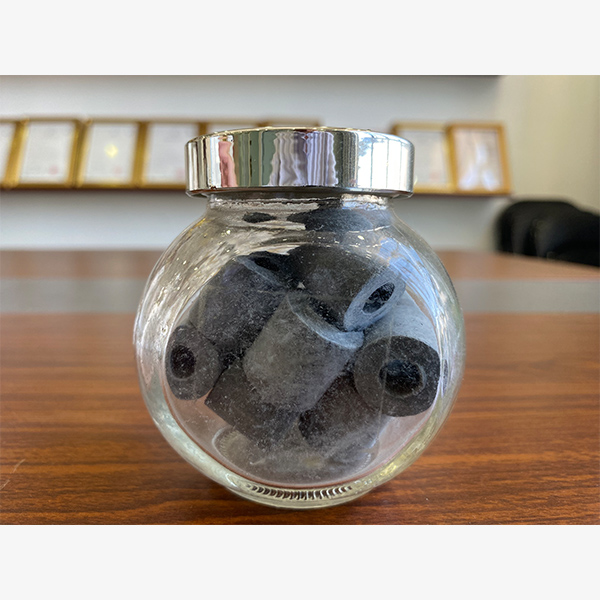
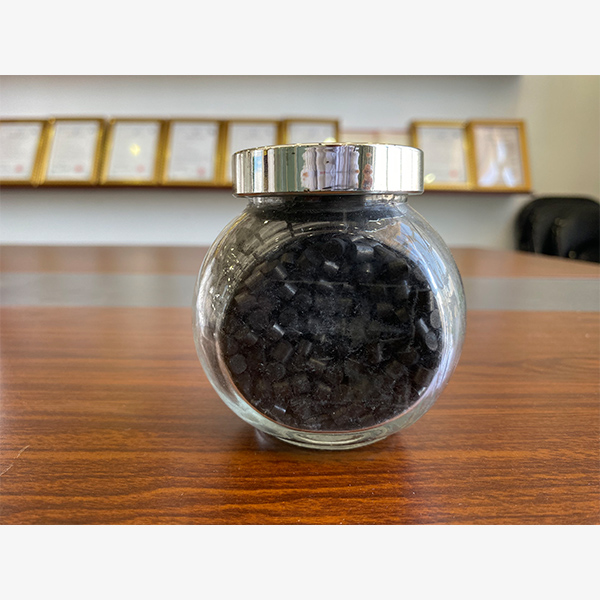
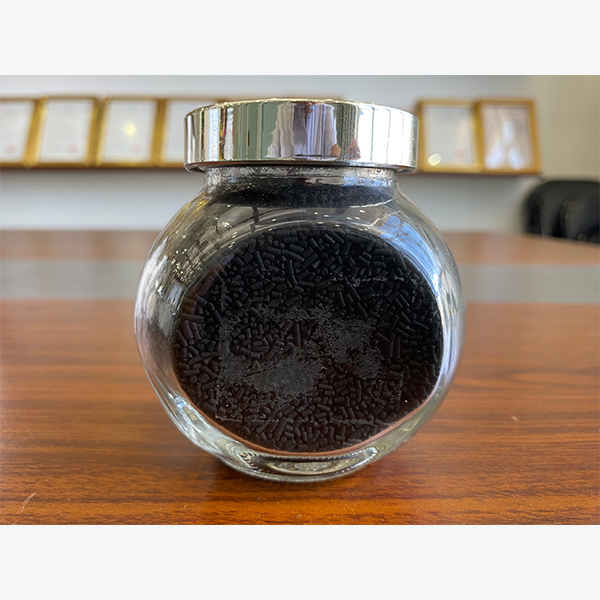
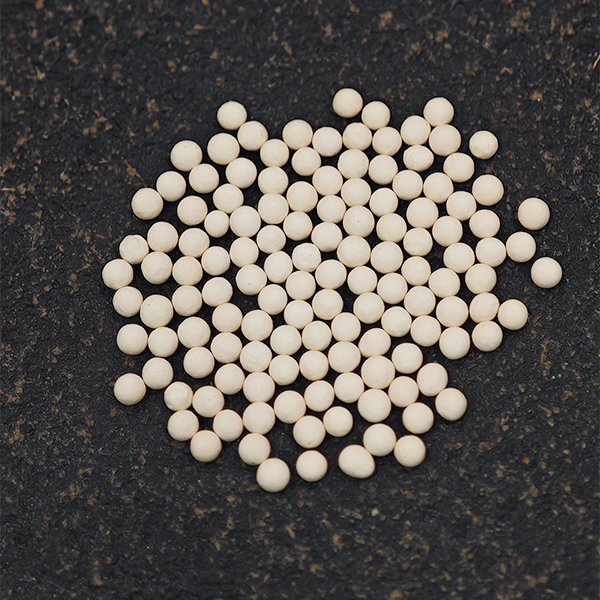
The custom-made palladium catalyst for hydrogen production produced by Hongbo belongs to the Pd-Al₂O₃ supported catalyst type. It uses high-purity activated alumina (Al₂O₃) as the carrier, uniformly loads precious metal palladium (Pd) on the surface of the carrier, and is made through special molding and roasting processes, with excellent catalytic activity and structural stability. This catalyst is mainly used in hydrogen production processes, and its core function is to remove oxygen impurities from hydrogen. At the same time, it can realize hydrogenation and deoxidation treatment of inert gases such as nitrogen, argon, and ammonia, ensuring the purity of hydrogen products and meeting the strict requirements of subsequent production processes. Its core reaction principle is catalytic hydrogenation and deoxidation reaction: when the feed gas containing oxygen impurities passes through the catalyst bed at a constant speed, under the catalytic action of the catalyst, the oxygen impurities in the gas combine with hydrogen to form harmless water (reaction equation: 2H₂ + O₂ → 2H₂O), and the water can be completely removed through the subsequent dehydration process, thus achieving the purpose of deep deoxidation. Compared with ordinary deoxidizers, this palladium catalyst deoxidizer has three significant advantages: high catalytic activity, which can start the reaction at a lower temperature and maintain stable deoxidation efficiency; excellent physical properties, no pulverization or agglomeration during use, high mechanical strength, which can effectively avoid bed blockage caused by catalyst particle damage; long service life, which can operate stably for a long time, greatly reducing replacement costs and shutdown losses.
Technical Performance and Parameters
The technical performance and parameters of Hongbo Pd-Al₂O₃ type palladium catalyst have been strictly tested and optimized to adapt to various hydrogen production process scenarios:
| Parameter | Description |
|---|
| Height-diameter ratio of catalytic reactor | ≥3:1. Optimized through hydrodynamic calculation, ensuring uniform feed gas distribution, avoiding channeling and bias flow, and full catalytic effect. |
| Service temperature | Catalytic reaction can start at room temperature without preheating; heating to 50-100℃ further improves activity and deoxidation depth. |
| Space velocity | 2000~8000hr⁻¹. Wide adaptation range, flexible adjustment for different working conditions and oxygen content levels. |
| Particle size | ∃3~5mm and ∃4~6mm. Spherical, smooth surface, good fluidity, easy to load and replace; balances bed resistance and contact area. |
| Bulk density | 0.75±0.1Kg/L. Uniform density enables dense, even bed formation, ensuring contact efficiency and easy loading capacity calculation. |
| Oxygen content of feed gas | ≤3%. Handles high oxygen content without pre-deoxidation, simplifying process and reducing equipment investment. |
| Deoxidation depth | ≤0.5×10⁻⁶V/V (≤0.5ppm). High precision deoxidation for demanding applications in electronics and scientific research. |
| Service life | ≥3 years. Under normal conditions, continuous stable operation for over 3 years with minimal replacement and maintenance costs. |
Functions of Palladium Catalyst
The custom-made Pd-Al₂O₃ type palladium catalyst by Hongbo has the core function of hydrogenation and deoxidation. According to different application scenarios, it is mainly divided into two application functions, with simple and convenient operation process, adapting to different process requirements:
- (1) Used for Deoxidation in Hydrogen
- (2) Used for Hydrogenation and Deoxidation of Other Inert Gases
Application Fields of Palladium Catalyst
Hongbo Pd-Al₂O₃ type palladium catalyst (HM-1 type) has been widely used in many industrial fields relying on its excellent deoxidation performance, simple operation process and long service life, covering core fields such as metallurgy, chemical industry, scientific research and electronics, with broad application prospects. In the metallurgical industry, it is mainly used for deoxidation treatment of hydrogen protective atmosphere in metallurgy, ensuring that metal materials are not oxidized during the metallurgical process and improving product quality; in the chemical industry, it is suitable for chemical hydrogen production processes such as synthetic ammonia and methanol, removing oxygen impurities from hydrogen, avoiding impurities affecting chemical reaction efficiency and product purity, and can also be used in chemical production protected by inert gases to achieve deep gas purification; in the scientific research field, it is used in experimental scenarios such as laboratory hydrogen production and gas purification, providing high-purity hydrogen and inert gases for scientific research experiments and ensuring the accuracy of experimental data; in the electronic industry, it is used for gas purification in the production process of electronic components. High-purity hydrogen and inert gases can avoid oxidation of electronic components and improve the stability and service life of products. With the continuous improvement of requirements for gas purity in various industries, the application scenarios of this catalyst will be further expanded to provide support for the high-quality development of more industries.
Packaging and Storage Methods
To ensure the stable performance of the palladium catalyst and prevent moisture, pollution or damage during transportation and storage, professional packaging and storage methods are adopted: the catalyst is packaged in double-layer plastic bags hermetically, the inner layer is a leak-proof and waterproof PE bag, and the outer layer is a wear-resistant and moisture-proof nylon bag, which can effectively isolate air, moisture and impurities; the hermetically packaged catalyst is put into thickened cardboard barrels or iron barrels, the barrel mouth is sealed with a sealing cover, the barrel body is marked with product name, specification, production date, shelf life and other information, and shockproof and buffer filling materials are equipped to avoid collision and damage of catalyst particles during transportation. During storage, the well-packaged catalyst should be placed in a dry, ventilated and cool warehouse, away from water sources, fire sources and corrosive substances, to avoid catalyst activity attenuation caused by humid and high-temperature environments; at the same time, extrusion and collision of packaging barrels are prohibited to prevent catalyst particles from pulverizing; the unopened catalyst can have a shelf life of 12 months under the specified storage conditions, and should be used as soon as possible after opening to avoid long-term exposure to air affecting performance.
Working Principle
The core reaction principle is catalytic hydrogenation and deoxidation. When the feed gas containing oxygen impurities passes through the catalyst bed, under the catalytic action of palladium (Pd), the oxygen combines with hydrogen to form harmless water:
2H₂ + O₂ → 2H₂O
The catalyst uses high-purity activated alumina (Al₂O₃) as the carrier, uniformly loaded with precious metal palladium (Pd), made through special molding and roasting processes, with excellent catalytic activity and structural stability.
Activation Start-up
No complex activation treatment is required for first use. Replace air in the catalytic reactor bed with dry nitrogen (N₂) to avoid explosive gas formation. Then directly introduce the feed gas. For inert gases, introduce pure hydrogen at 100~300hr⁻¹ for 1~2 hours to activate.