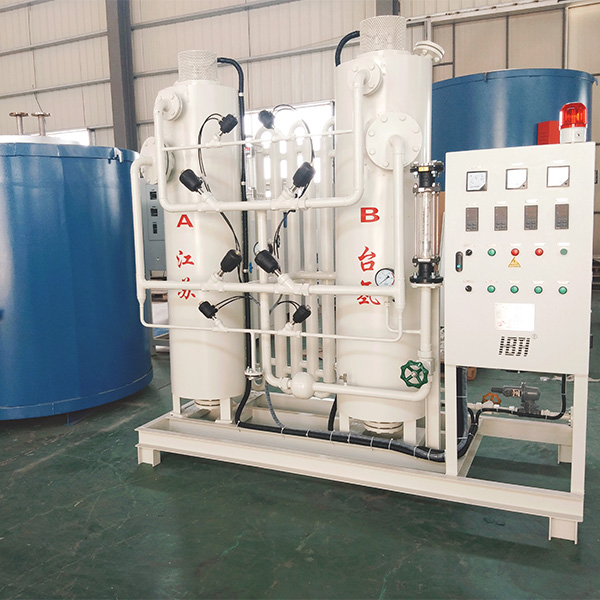
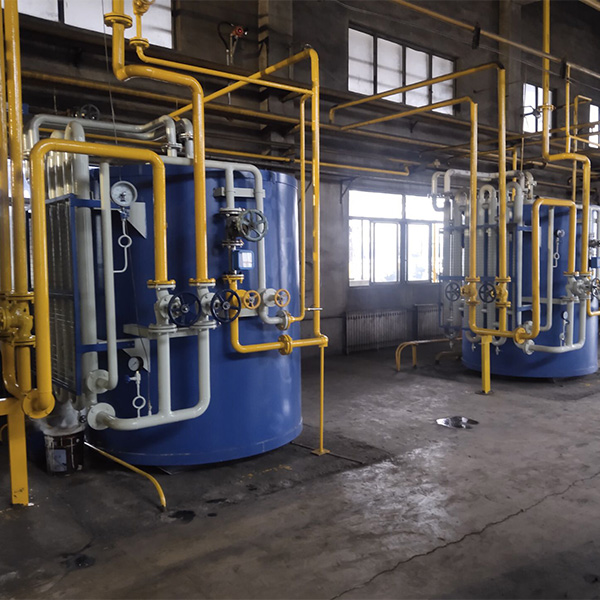
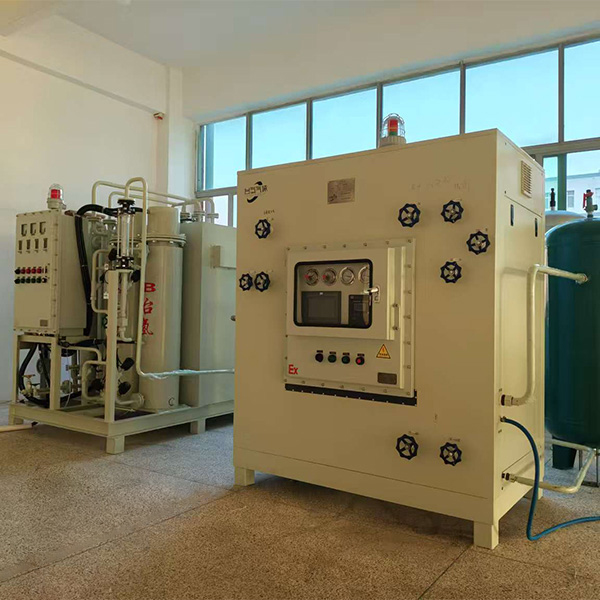
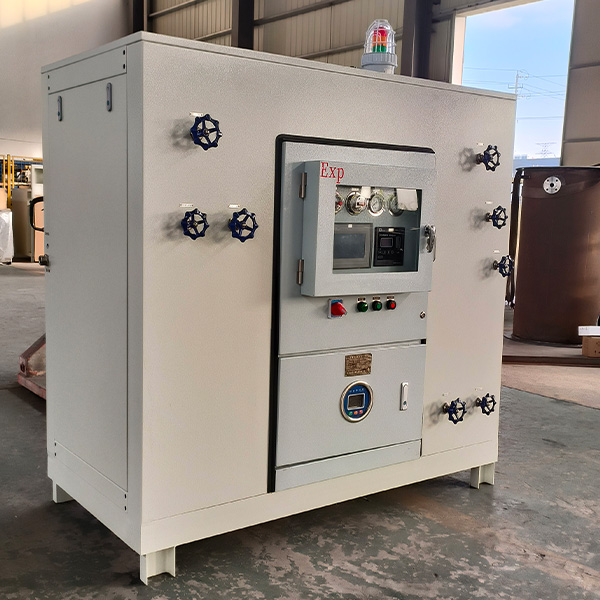
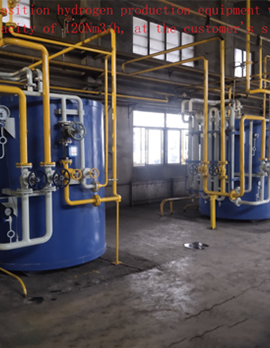
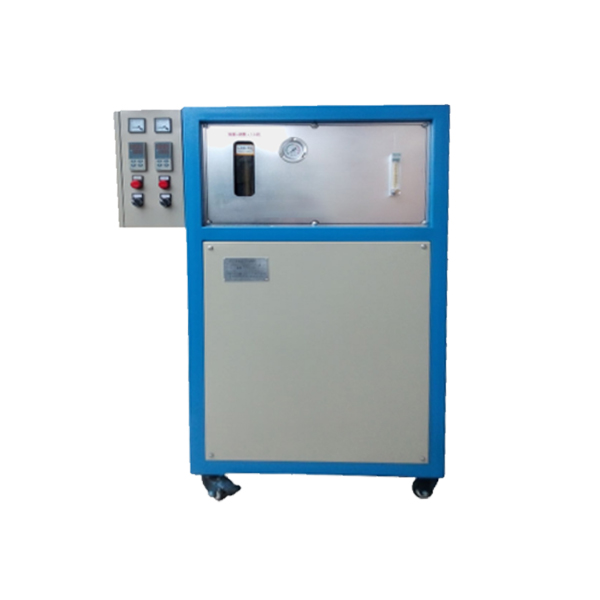
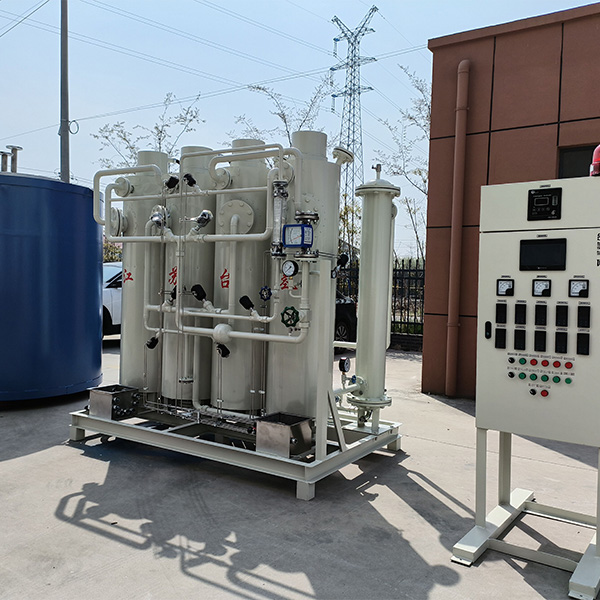
Ammonia decomposition hydrogen production technology efficiently breaks down ammonia (NH₃) into a 25% nitrogen and 75% hydrogen gas mixture. With easily available raw materials, an environmentally friendly process, and controllable gas purity, this technology is widely used in heat treatment, metallurgy, and glass manufacturing.
Ammonia decomposition hydrogen production technology, as a mature and efficient gas preparation process, occupies an important position in the field of industrial production. Its core principle is to accurately decompose ammonia (NH₃) into a mixed gas consisting of 25% nitrogen (N₂) and 75% hydrogen (H₂) by volume under specific equipment and process conditions. This ratio is derived from the chemical formula of ammonia—each two molecules of ammonia decompose to form one molecule of nitrogen and three molecules of hydrogen, naturally forming a stable hydrogen-nitrogen mixture system. Thanks to its advantages such as easily available raw materials, environmentally friendly preparation process, and controllable gas purity, this technology has been widely applied in multiple industrial segments and has become one of the key technologies supporting the high-quality development of industries such as heat treatment, metallurgy, and glass manufacturing.
Technological Process
The complete process flow of ammonia decomposition hydrogen production can be divided into three core links: raw material pretreatment, ammonia decomposition reaction, and gas purification. These links are closely connected to jointly ensure the quality of the final gas product. In terms of raw materials, high-purity liquid ammonia is usually used as the reaction substrate. Liquid ammonia features convenient storage, safe transportation, and high hydrogen content—its hydrogen content can reach 17.6%, far exceeding that of most gaseous hydrogen sources. Moreover, liquid ammonia is in a liquid state at normal temperature and pressure, requiring much less storage space than gaseous hydrogen, which can effectively reduce the raw material storage cost of enterprises. In the raw material pretreatment stage, liquid ammonia is first centrally transported and vaporized through a dedicated manifold device. The manifold device can realize stable confluence and flow regulation of multi-path liquid ammonia, ensuring uniform and continuous supply of liquid ammonia and avoiding the impact of flow fluctuations on subsequent reaction efficiency. The vaporization process converts liquid ammonia into gaseous ammonia through low-temperature heating or low-pressure evaporation in a closed environment, while removing trace impurities that may be contained in the raw materials, providing a pure reaction substrate for the subsequent decomposition reaction.
After entering the ammonia decomposition equipment, gaseous ammonia undergoes decomposition reaction under specific temperature, pressure, and catalyst conditions. The core of ammonia decomposition equipment consists of a reaction furnace body and a catalyst system. The furnace body is usually made of high-temperature and corrosion-resistant special steel, which can withstand physical and chemical losses in a high-temperature reaction environment and ensure the long-term stable operation of the equipment. During the reaction, the temperature inside the furnace needs to be controlled between 800-900℃, a temperature range that can effectively activate the catalyst activity and accelerate the ammonia decomposition reaction. Commonly used catalysts are mostly nickel-based, and some high-end equipment adopts ruthenium-based or iron-based composite catalysts. Such catalysts have the characteristics of high catalytic efficiency, long service life, and strong anti-poisoning ability, enabling the ammonia decomposition rate to reach more than 99.9% and minimizing the residue of undecomposed ammonia. Under the action of the catalyst, gaseous ammonia molecules undergo bond breaking and recombination to form a mixed gas of hydrogen and nitrogen. This process does not require the addition of other reagents, emits no harmful gases, and only produces hydrogen-nitrogen mixture, which is in line with the development concept of green production in modern industry.
Decomposition without Purified Ammonia
Model
Gas Production (Nm³/h)
Ammonia Consumption (kg/h)
VHz Electric Source
Ammonia Dissociation Power (KW)
Heating Element
Inlet Pipe Size (DNmm)
Outlet Pipe Diameter (DNmm)
Host L*W*H (mm)
HBAQ-5
5
2.00
220;50
6.0
Resistor Flat Strip
DN6
DN6
1150*770*1750
HBAQ-10
10
4.00
380;50
12.0
Resistor Flat Strip
DN10
DN15
1340*940*1750
HBAQ-20
20
8.00
380;50
24.0
Resistor Flat Strip
DN15
DN20
1420*1500*1800
HBAQ-30
30
12.00
380;50
36.0
Resistor Flat Strip
DN15
DN25
1420*1500*1800
HBAQ-40
40
16.00
380;50
48.0
Coiled Flat Strip
DN20
DN32
1800*2000
HBAQ-50
50
20.00
380;50
60.0
Coiled Flat Strip
DN25
DN40
1800*2000
HBAQ-60
60
24.00
380;50
70.0
Coiled Flat Strip
DN25
DN40
1800*2000
HBAQ-80
80
32.00
380;50
90.0
Coiled Flat Strip
DN25
DN40
1800*2240
HBAQ-100
100
40.00
380;50
110.0
Coiled Flat Strip
DN25
DN40
1800*2345
HBAQ-120
120
48.00
380;50
120.0
Coiled Flat Strip
DN40
DN50
1850*2200
HBAQ-150
150
60.00
380;50
150.0
Coiled Flat Strip
DN40
DN50
1840*2430
HBAQ-180
180
72.00
380;50
180.0
Coiled Flat Strip
DN40
DN50
2040*2600
HBAQ-200
200
80.00
380;50
200.0
Coiled Flat Strip
DN50
DN65
1940*2670
HBAQ-250
250
100.00
380;50
250.0
Coiled Flat Strip
DN65
DN80
1940*2750
HBAQ-300
300
120.00
380;50
300.0
Coiled Flat Strip
DN65
DN80
2210*2750
Decomposition with Purified Ammonia
Model
Gas Production (Nm³/h)
Ammonia Consumption (kg/h)
VHz Electric Source
Dissociation Power (KW)
Drying Power (KW)
Heating Element
Inlet Pipe Size (DNmm)
Outlet Pipe Diameter (DNmm)
Host L*W*H (mm)
HBAQFC-5
5
2.00
220;50
6.00
1.00
Resistor Flat Strip
DN6
DN6
1500*890*1700
HBAQFC-10
10
4.00
380;50
12.00
1.20
Resistor Flat Strip
DN10
DN15
1520*940*1800
HBAQFC-20
20
8.00
380;50
24.00
3.60
Resistor Flat Strip
DN15
DN20
1800*1420*1620
HBAQFC-30
30
12.00
380;50
36.00
4.50
Resistor Flat Strip
DN15
DN25
1800*1420*1620
HBAQFC-40
40
16.00
380;50
48.00
3.60
Coiled Flat Strip
DN20
DN32
2200*950*2200/1800*2000
HBAQFC-50
50
20.00
380;50
60.00
4.50
Coiled Flat Strip
DN25
DN40
2250*950*2500/1800*2000
HBAQFC-60
60
24.00
380;50
70.00
4.50
Coiled Flat Strip
DN25
DN40
2250*950*2500/1800*2000
HBAQFC-80
80
32.00
380;50
90.00
9.00
Coiled Flat Strip
DN25
DN40
2300*1000*2600/1800*2240
HBAQFC-100
100
40.00
380;50
110.00
9.00
Coiled Flat Strip
DN25
DN40
2350*1100*2600/1800*2345
HBAQFC-120
120
48.00
380;50
120.00
9.00
Coiled Flat Strip
DN40
DN50
2350*1200*2100/1850*2200
HBAQFC-150
150
60.00
380;50
150.00
12.00
Coiled Flat Strip
DN40
DN50
2350*1500*3000/1840*2430
HBAQFC-180
180
72.00
380;50
180.00
12.00
Coiled Flat Strip
DN40
DN50
2350*1500*3000/2040*2600
HBAQFC-200
200
80.00
380;50
200.00
15.00
Coiled Flat Strip
DN50
DN65
2350*1500*3000/1940*2670
HBAQFC-250
250
100.00
380;50
250.00
15.00
Coiled Flat Strip
DN65
DN80
2850*1700*3000/1940*2750
HBAQFC-300
300
120.00
380;50
300.00
18.00
Coiled Flat Strip
DN65
DN80
2850*1700*3000/2210*2750
Ammonia Cracking Principle
The core principle of ammonia cracking is to decompose ammonia (NH₃) into a mixed gas of 25% nitrogen (N₂) and 75% hydrogen (H₂) by volume under specific temperature (800-900℃), pressure, and catalyst conditions. The reaction formula is: 2NH₃ → N₂ + 3H₂.
In the ammonia decomposition equipment, gaseous ammonia undergoes a decomposition reaction under the action of nickel-based or ruthenium-based catalysts. The furnace body is made of high-temperature and corrosion-resistant special steel, which can withstand physical and chemical losses in a high-temperature reaction environment. Commonly used catalysts have the characteristics of high catalytic efficiency, long service life, and strong anti-poisoning ability, enabling the ammonia decomposition rate to reach more than 99.9% and minimizing the residue of undecomposed ammonia. This process does not require the addition of other reagents, emits no harmful gases, and only produces a hydrogen-nitrogen mixture.
Prior to the reaction, high-purity liquid ammonia is vaporized through low-temperature heating or low-pressure evaporation in a closed environment, while trace impurities are removed to provide a pure reaction substrate. After decomposition, the resulting hydrogen-nitrogen mixture can be used directly or further purified through a drying process for applications requiring high-purity gas.
Product Advantages
Cost-Effective Raw Materials: Liquid ammonia raw materials are relatively cheap, convenient to transport and store. With a hydrogen content of up to 17.6%, liquid ammonia far exceeds most gaseous hydrogen sources. It requires much less storage space than gaseous hydrogen, effectively reducing raw material storage costs.
Environmentally Friendly Process: The entire preparation process emits no harmful gases, and the hydrogen-nitrogen mixture can also reduce the consumption of oxidizing gases in traditional processes, supporting the "double carbon" goal of green industrial transformation.
High Efficiency and Purity: Advanced nickel-based or ruthenium-based catalysts enable the ammonia decomposition rate to reach more than 99.9%, minimizing undecomposed ammonia residue. The gas purity is controllable, meeting the strict requirements of high-end manufacturing.
Simple and Reliable Equipment: Ammonia decomposition hydrogen production equipment has a relatively simple structure, convenient operation, and low maintenance cost, making it suitable for large-scale industrial production.
Safe Operation: Compared with pure hydrogen atmospheres, the hydrogen-nitrogen mixture significantly improves safety while achieving the same or even better process results.
Application Fields
Due to the reducibility of hydrogen and the inert protective property of nitrogen, the hydrogen-nitrogen mixture generated by ammonia decomposition hydrogen production technology has shown strong adaptability in the heat treatment industry and has become an indispensable core gas source for this industry.
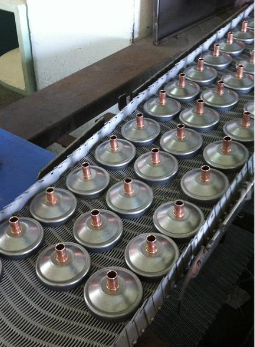
High-Temperature Brazing: One of the most widely used processes of hydrogen-nitrogen mixture in the heat treatment industry. Used for precision connection of metal components made of stainless steel, copper alloy, aluminum alloy and other materials. Hydrogen reduces the oxide film on the metal surface, while nitrogen isolates air and prevents reoxidation, ensuring compactness and strength of the welding joint.
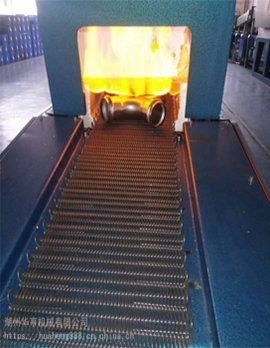
Bright Annealing: Eliminates internal stress generated during metal processing, improving toughness, ductility, and surface finish. The hydrogen-nitrogen mixture is introduced into the annealing furnace as a protective atmosphere, ensuring metal materials maintain a bright surface texture after annealing. Compared with pure hydrogen, it offers lower cost and higher safety.
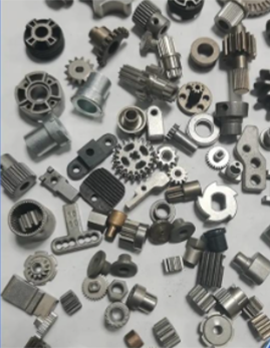
Metal Powder Reduction: Used to prepare high-purity metal powders such as iron powder, copper powder, and nickel powder for powder metallurgy, electronic components, and magnetic materials. Hydrogen acts as a reducing agent to reduce oxidative impurities, while nitrogen prevents reoxidation.
Aluminum Alloy Solution Treatment: The hydrogen-nitrogen mixture effectively prevents oxidation and discoloration of aluminum alloy at high temperatures, promoting homogenization of the internal structure and improving the solution treatment effect.
Powder Metallurgy Sintering: The hydrogen-nitrogen mixture is used as the sintering atmosphere. Hydrogen reduces oxide film on metal powder surfaces and improves bonding force, while nitrogen adjusts atmosphere pressure and inhibits grain growth, resulting in uniform and fine product structure.
Float Glass Production: In the tin bath link, the hydrogen-nitrogen mixture is introduced as a protective atmosphere. Nitrogen prevents high-temperature tin liquid from oxidizing, while hydrogen reduces trace tin oxide, ensuring a smooth and clean glass surface.
Nitriding Furnace Applications: Used for nitriding furnace atmosphere adjustment and tail gas treatment. The hydrogen-nitrogen mixture can be mixed with ammonia and nitrogen to precisely adjust the nitrogen potential inside the furnace. Tail gas containing trace ammonia and cyanide can be decomposed and converted into harmless emissions.